
The Internet Stopped Being Just a Place to Consume Content
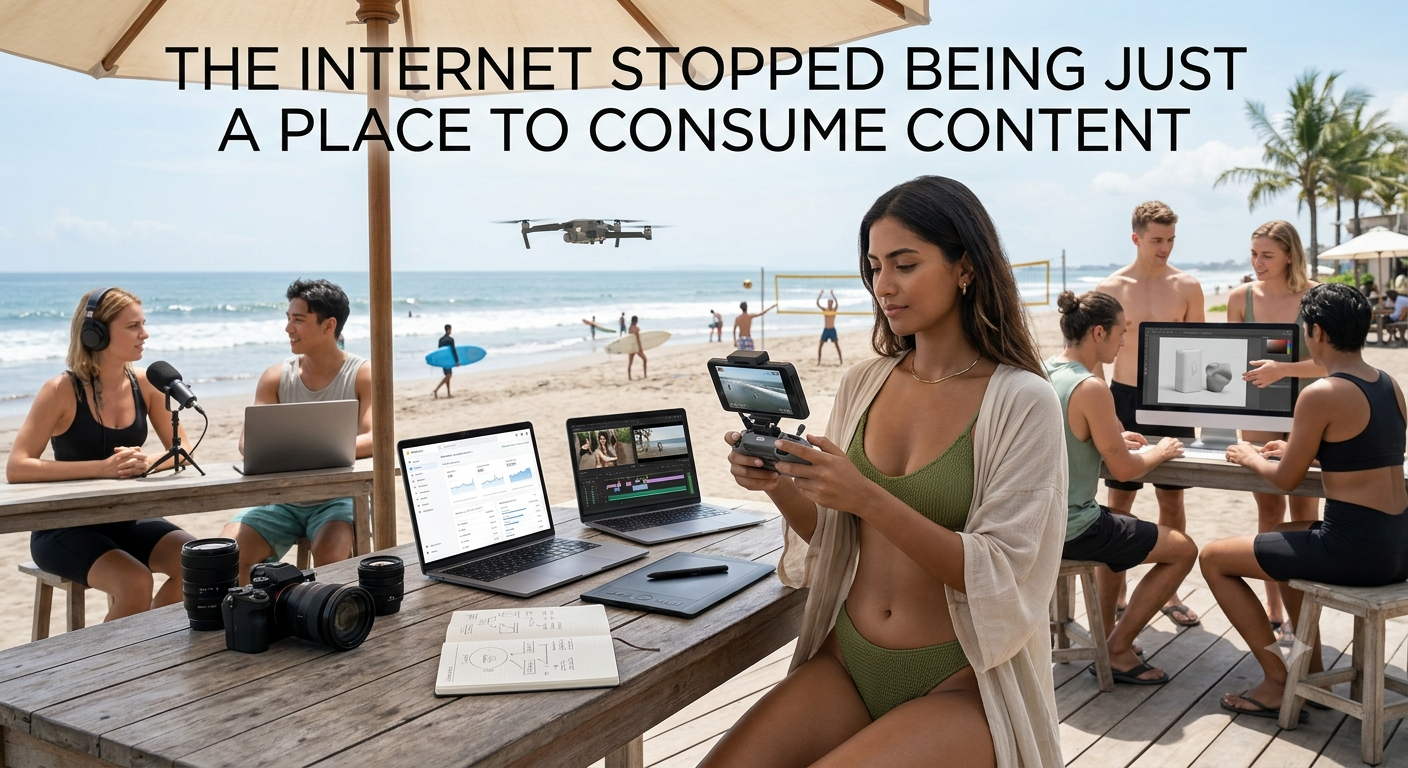
There was a time when most people went online for one simple reason.
They wanted information.
Maybe they needed directions.
Maybe they were searching for answers to a question.
Maybe they wanted to read the news.
The internet was useful, but it felt mostly one-sided.
Websites published content and visitors consumed it.
That was the relationship.
At some point, though, things started changing.
Slowly at first.
Then all at once.
People Wanted More Than Information
Information became easy to find.
Search engines improved.
Websites became larger.
Databases became endless.
The challenge stopped being access.
The challenge became expression.
People didn't just want to read anymore.
They wanted to contribute.
A comment here.
A photo there.
A profile that felt uniquely theirs.
The internet gradually became less about finding things and more about sharing things.
Profiles Became Personal Spaces
One of the more interesting shifts online was the way profiles evolved.
Early user pages were often simple and forgettable.
Today, people treat digital spaces almost like extensions of their personalities.
Even small details matter.
A username.
A profile image.
A short bio.
The communities someone follows.
These elements may seem minor, but together they create an identity.
Not necessarily a complete picture of a person.
Just a version they choose to present online.
Self-Expression Looks Different for Everyone
Some people enjoy posting artwork.
Others write.
Others create videos.
Many simply participate in conversations.
There isn't a single correct way to express yourself online.
That's part of what makes the internet interesting.
Different communities encourage different forms of creativity.
Some focus on discussion.
Others focus on visuals.
Others thrive on humor and shared experiences.
The methods vary.
The motivation remains surprisingly similar.
People want to be seen.
Creativity Became Part of Everyday Browsing
Years ago, creating something online often felt like a separate activity.
You sat down with a specific goal.
Now creativity is woven into everyday behavior.
A person edits a photo.
Another shares an opinion.
Someone else remixes an idea they found earlier in the day.
The line between consumer and creator became difficult to identify.
Most users are a little bit of both.
Why People Keep Looking for New Tools
Every generation of internet users seems to discover a new collection of platforms and tools.
The technology changes.
The curiosity remains.
People naturally look for ways to express ideas more easily or experiment with different formats.
Sometimes a tool succeeds because it's powerful.
Other times it succeeds because it's simple.
Ease of use matters more than many people realize.
If something feels approachable, users are much more likely to explore it.
The Internet Rewards Experimentation
One reason online culture evolves so quickly is that experimentation carries very little risk.
Someone tries a new platform.
If they enjoy it, they stay.
If they don't, they move on.
The cost of exploration is incredibly low.
That freedom encourages people to test ideas they might never attempt in other environments.
Many popular internet trends started exactly that way.
Not through careful planning.
Through curiosity.
People Enjoy Putting Their Own Spin on Things
Rarely does someone encounter an idea and leave it completely untouched.
People modify things.
They reinterpret them.
They build on them.
That's true whether we're talking about artwork, discussions, memes, or entirely new communities.
The internet thrives on variation.
One person creates something.
Hundreds of others adapt it.
Before long, the original idea has taken on a life of its own.
Technology Is Only Part of the Story
When people discuss online trends, they often focus on technology.
Technology matters.
But behavior matters more.
Most successful platforms don't succeed because they're technically impressive.
They succeed because they align with how people naturally behave.
People like sharing.
They like experimenting.
They like expressing themselves.
Tools that support those instincts often gain attention quickly.
That's one reason platforms like clothoff generate interest among users who enjoy exploring new forms of digital creativity. The technology attracts attention, but the underlying appeal comes from something much older: the desire to interact with ideas rather than simply observe them.
Looking Back
If someone from the early internet suddenly logged on today, they would probably be surprised by how much content is created by ordinary users.
Not celebrities.
Not companies.
Regular people.
The shift happened gradually enough that most of us barely noticed it.
Yet it's one of the biggest transformations the internet has experienced.
Users stopped being passive audiences.
They became active participants.
Closing Thoughts
The internet still helps people find information.
It always will.
But information is no longer the whole story.
People come online to create, share, discuss, and experiment.
They build communities.
They express themselves.
They shape the culture around them.
In many ways, that's what makes today's internet feel alive.
Not the technology.
The people using it.